In 2026, the global outdoor furniture picture is no longer a question of “who is cheaper,” but of “who can prove origin faster.” Vietnam’s wood and furniture exports are forecast to exceed USD 20 billion, with the US accounting for roughly 55% of value. That concentration is both a foundation and a risk: a single tariff change or consumer shift in one market is enough to shake the entire chain.
The clearest opportunity comes from supply-chain restructuring. European and North American retailers are actively diversifying away from single-source dependence, and Vietnam benefits from EVFTA, CPTPP, and a now-mature wood–metal fabrication capability. For an outdoor furniture manufacturer vietnam with consistent craftsmanship, this is the moment to move from order-taking subcontractor to product-development partner — which is where the real margin sits.
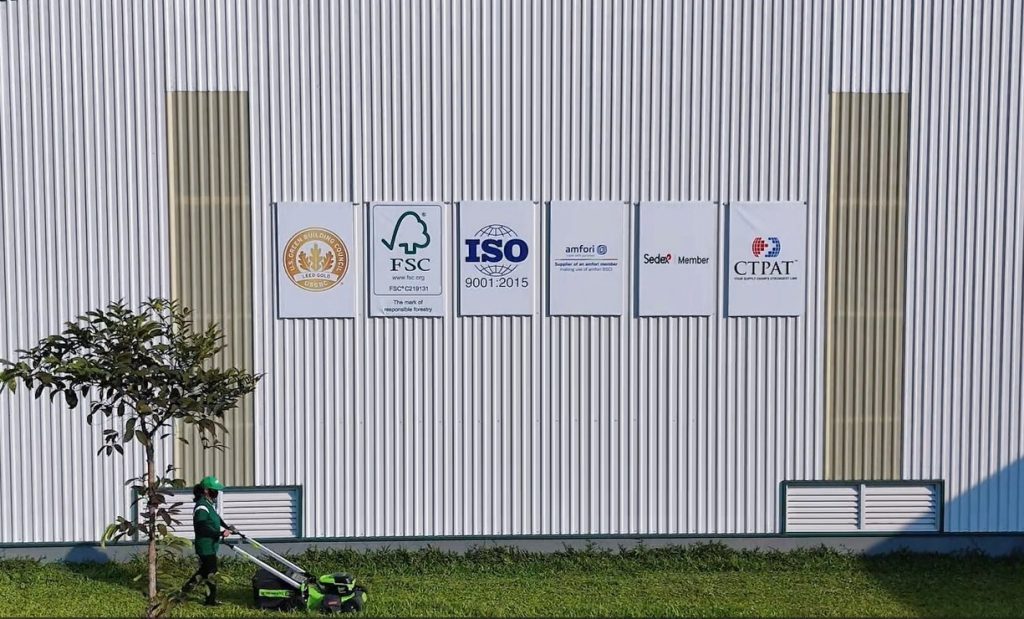
The challenge, however, lies in the paperwork, not the workshop. EUDR requires plot-level geolocation and proof that goods are deforestation-free after 2020; CBAM adds emissions pressure on top. Many factories make excellent products but run fragmented traceability systems, and lose orders over missing documentation rather than quality. As a result, the credentials of a furniture manufacturer with LEED/FSC/BSCI certification vietnam are becoming a precondition for shelf space, not a bonus.
Practically, three things deserve immediate attention: digitize material traceability down to each timber lot; standardize BOM and costing data so quotations move fast when a buyer asks; and invest in durable design instead of racing on discounts. This is the path greenwind follows at its furniture factory Ben Tre Vietnam, tying sustainable furniture manufacturing vietnam to on-time delivery capability.
In short: sustainable outdoor furniture vietnam will not win on price, but on the ability to prove itself — transparent, compliant, and on time.